

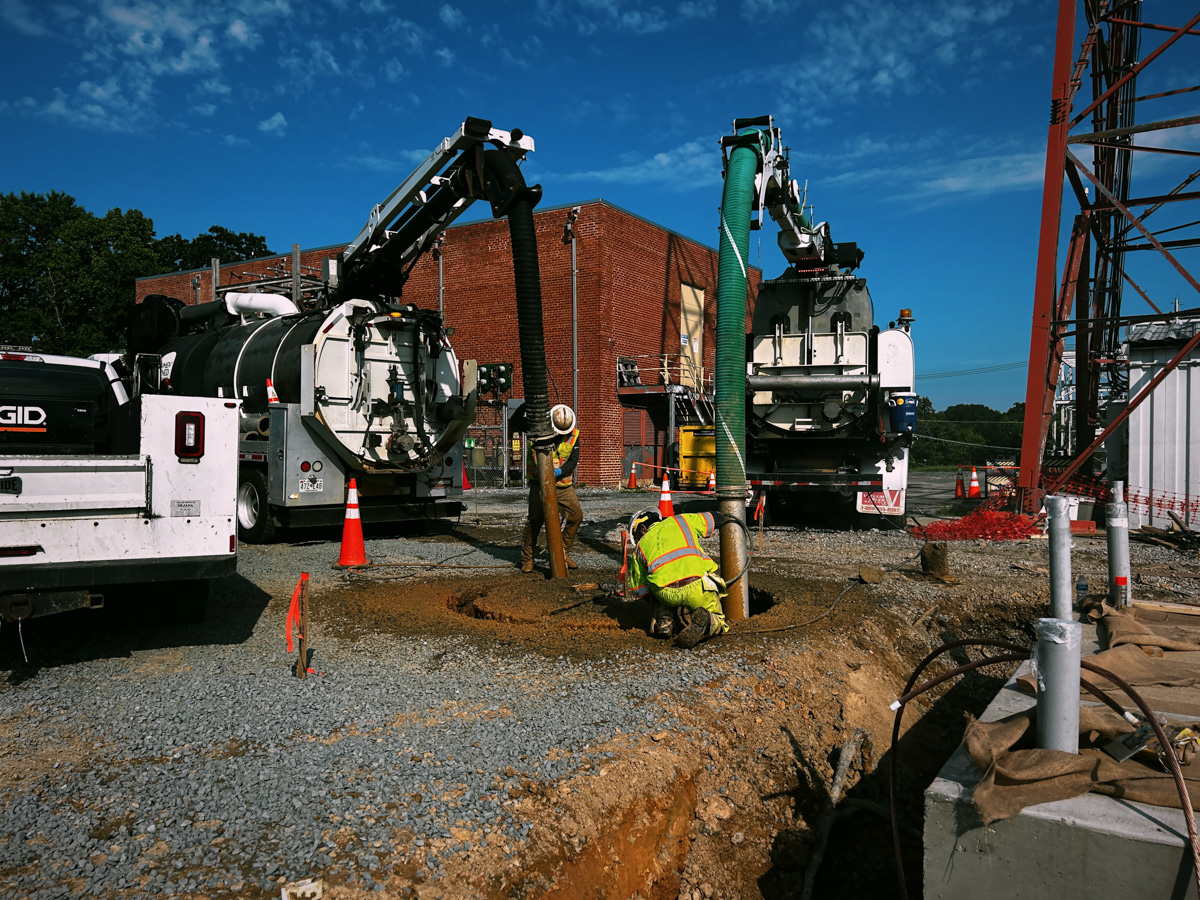
Every excavation contractor in the Mid-Atlantic has heard the horror stories. A backhoe operator clips a high-pressure gas line in Fairfax County. A trackhoe severs a fiber bundle serving a hospital in Baltimore. These aren't just bad days—they're business-threatening events that could have been prevented with hydro excavation.
Let's talk about what a utility strike actually costs, and why soft dig methods aren't an expense—they're an investment.
The Immediate Hit
When you strike a utility, the clock starts ticking on multiple cost centers simultaneously. The utility company dispatches emergency crews—and you're paying for that response. If it's a gas line, you're looking at evacuation costs, fire department response, and potential hazmat cleanup. For communications lines, you might be liable for service interruption to businesses or critical infrastructure.
Repair costs are just the beginning. Then come the fines. State damage prevention programs in Maryland, Virginia, Pennsylvania, and Delaware don't take utility strikes lightly. First-time offenses can run into thousands of dollars. Repeat violations? Those numbers multiply fast.
The Hidden Costs That Really Hurt
Beyond the immediate financial impact, utility strikes trigger a cascade of business consequences. Your insurance premiums increase. Your safety modifier takes a hit, affecting your ability to bid on larger projects. Some clients will remove you from their approved contractor lists entirely.
Project delays cost money every single day. While you're waiting for repairs and investigations, your crew is idle but still on payroll. Equipment sits unused. Other jobs get pushed back. Your reputation takes damage that's hard to quantify but easy to feel when the next bid cycle comes around.
How Hydro Excavation Changes the Math
Hydro excavation eliminates most utility strike risk. The soft dig process uses pressurized water to break up soil and a powerful vacuum to remove it. There's no mechanical force that can sever lines or crush pipes. The method is so precise that it can expose utilities within inches without causing damage.
Yes, hydro excavation costs more per hour than running a trackhoe. But compare that hourly rate to the cost of a single utility strike. One avoided incident pays for dozens of hydro excavation service calls.
Real Efficiency Gains
Beyond avoiding disasters, hydro excavation often completes utility exposure work faster than traditional methods. There's no need for extensive hand digging around located utilities. The process is continuous rather than the stop-start approach required with mechanical excavation.
Your crew works with confidence rather than anxiety. That mental shift alone improves productivity. Workers who aren't constantly worried about hitting something underground focus better and work more efficiently.
The Bottom Line
Mid-Atlantic contractors face some of the most complex underground utility environments in the country. Dense urban infrastructure, aging utility systems, and incomplete records make every dig a potential risk. Hydro excavation doesn't eliminate all uncertainty, but it removes the catastrophic danger that comes with mechanical digging.
Calculate what a utility strike would cost your business. Then compare that to the cost of using hydro excavation for your next utility-adjacent project. The math isn't even close.